
Transfer to CHOP and a change in treatment plan
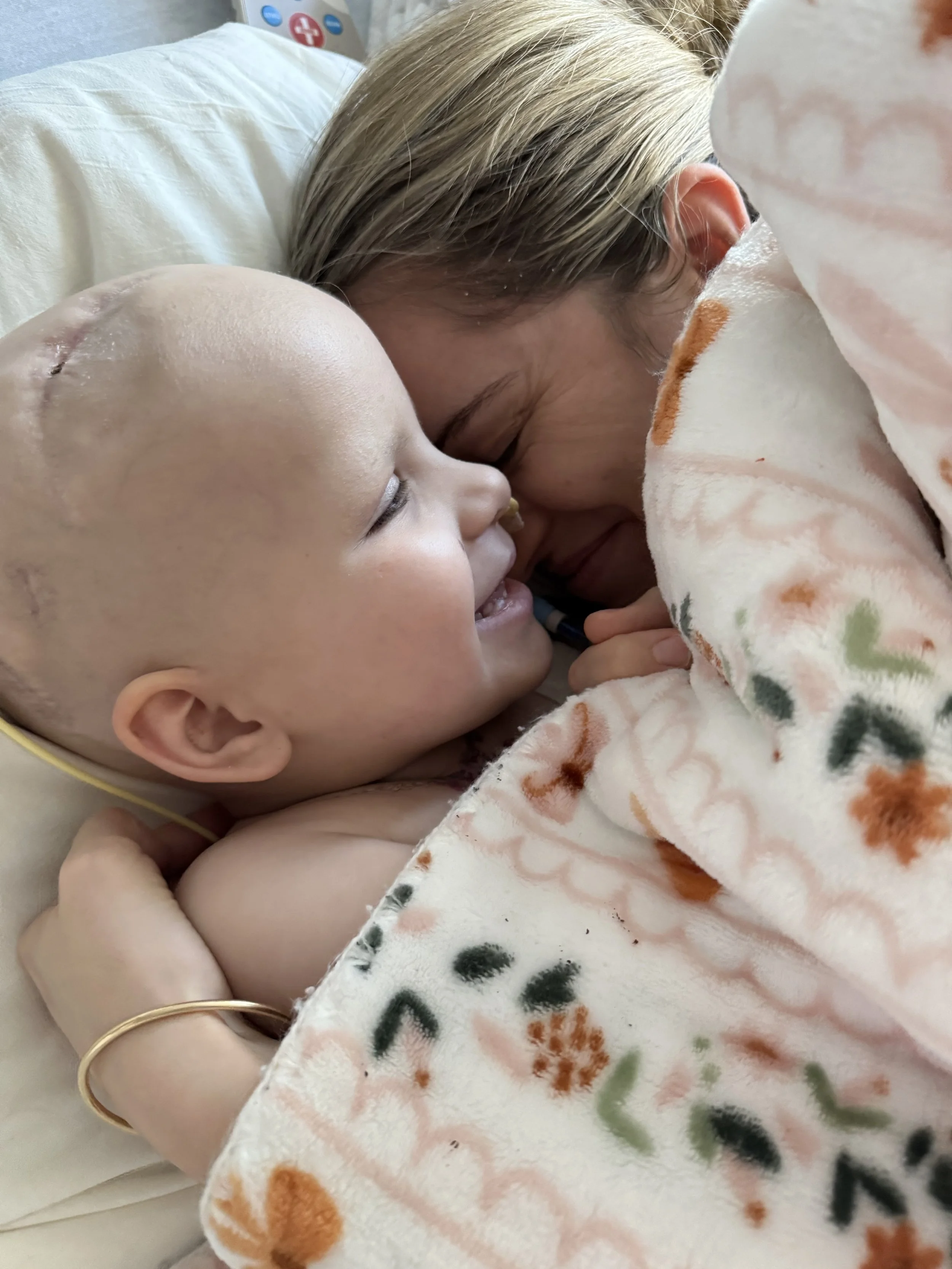
Since our last update, a lot has happened — some encouraging, some incredibly difficult.
Bea was successfully transferred by ambulance to CHOP, and that trip went smoothly, which felt like a small miracle after everything her lungs had been through. Since arriving, we’ve felt so grateful to be here. The ICU team has been exceptional. Under their care, Bea’s respiratory status improved much faster than we expected. Watching her stabilize after such a scary stretch has been a huge relief. She’s now on room air during the day, and just a small amount of oxygen via a nasal cannula overnight (no more dreaded BIPAP!). She’s still getting the majority of her nutrition through an NG tube, but we’re making baby steps with eating (loving orange Jello).
One of the hardest parts of the ICU stay came during the process of weaning Bea off Precedex. She experienced severe withdrawal for a few days, including scary hallucinations and episodes of fear and confusion that were really hard to witness.
Thankfully, once we were able to fully come off the Precedex, those symptoms began to resolve. It also meant Bea was stable enough to transfer out of the ICU and down to the regular oncology floor — a big step forward.
Now, our focus is on the next phase of recovery. Bea is still on Ativan, clonidine, and methadone, and we’ll be carefully weaning those medications. At the same time, she’s working with physical therapy to rebuild strength after such a long and intensive hospital course. These are slow but important steps. A big moment was getting her outside in her wheelchair - her first fresh air in months.
If she continues progressing — coming off those medications and gaining strength — we could technically be discharged and complete radiation outpatient. In that case, we would stay locally in the apartment we’re renting nearby, where Reid and our families have been, which would be a welcome shift toward a more normal day-to-day environment during treatment.
Sadly though, as part of preparing for radiation, Bea underwent a planning scan. Unfortunately, that scan showed new growth on the left side of her brain, along with an increase in the size of a nodule in her original tumor bed. This was devastating news.
The most likely explanation is a combination of how aggressive ATRT can be, along with the unavoidable delay in treatment while Bea was critically ill with her respiratory complications and intubation.
Dr. Fisher, our lead oncologist here, consulted with multiple experts and presented us with a range of options for next steps, from most aggressive to least, taking into account these new findings and what they mean for her prognosis.
After a long family meeting with PACT and the oncology team, we’ve made the decision to move forward with 6 weeks of craniospinal radiation (CSI), instead of the focal radiation that had originally been planned.
This was not an easy decision. The long-term side effects of CSI are hard to fully wrap our heads around, and not something we take lightly. But ultimately, we are hoping this path gives Bea the best chance at more time and stability — without the immediate physical toll, medical trauma, and frequent hospitalizations that additional chemo would likely bring.
If all goes as planned, we’re hopeful this treatment can be done here at CHOP — and that, with continued progress, we could be home in Bedford by mid-May.
We’re taking things one day at a time, and hope we continue to see clinical improvements every day in her strength and energy. It’s been great to see her beautiful eyelashes growing back :) and we’re seeing signs of our spunky Bea again.
With love,
Shannon & Brooks